
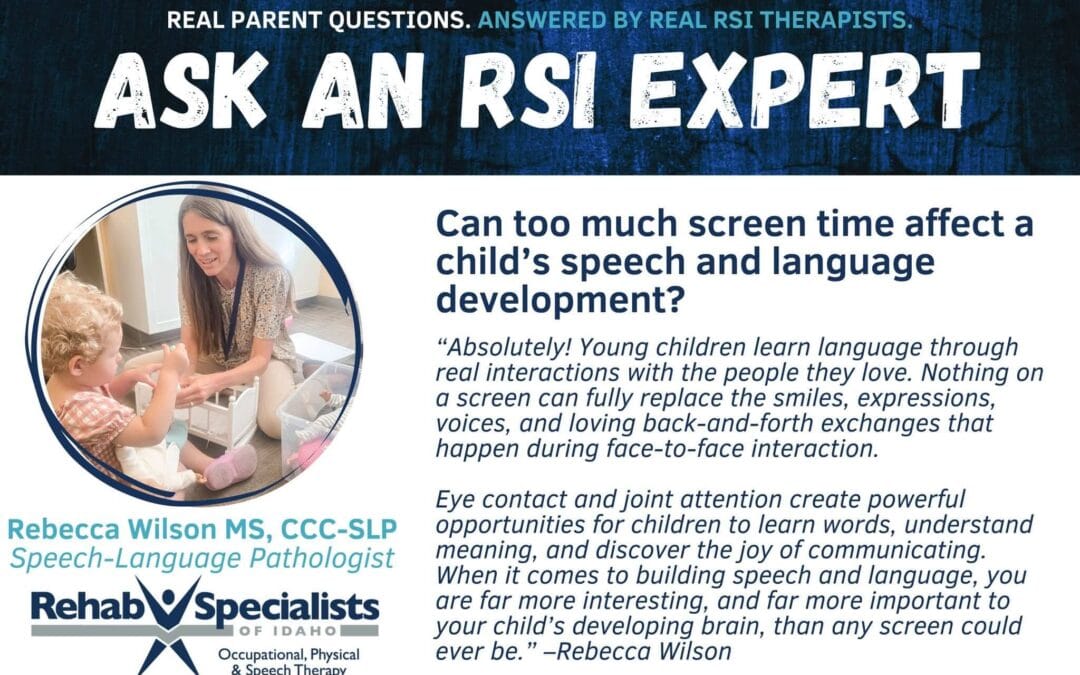
Screens are part of everyday life for many families. But can too much screen time affect a child’s speech and language development? Especially for young children, time spent watching screens can crowd out opportunities to talk, play, and connect with others.
For this edition of Ask an RSI Expert, Rebecca Wilson, MS, CCC-SLP, shares why everyday interactions matter:
“Absolutely! Young children learn language through real interactions with the people they love. Nothing on a screen can fully replace the smiles, expressions, voices, and loving back-and-forth exchanges that happen during face-to-face interaction.
Eye contact and joint attention create powerful opportunities for children to learn words, understand meaning, and discover the joy of communicating. When it comes to building speech and language, you are far more interesting, and far more important to your child’s developing brain, than any screen could ever be.”
Rebecca Wilson, MS, CCC-SLP
Why everyday interaction matters
Children practice communication when someone responds to their sounds, gestures, words, and interests. Sharing attention might mean looking at a book together, noticing a dog on a walk, or taking turns rolling a ball.
These little moments give children opportunities to hear language and participate in the exchange.
Simple ways to make room for connection
You don’t need elaborate activities or special toys. Start with everyday routines:
- Talk during daily tasks. Describe what you’re doing while getting dressed, preparing food, or cleaning up.
- Share a book. Talk about the pictures and follow what catches your child’s interest.
- Pause and respond. Give your child time to communicate through a sound, gesture, or word.
- Play together. Take turns stacking blocks, rolling cars, or singing a familiar song.
- Watch together when using screens. Talk about what you see and connect it to your child’s world.
Start with one small change
Try putting devices away during one meal or setting aside a few minutes for play together. The goal is to create more opportunities for conversation and connection throughout the day.
If you have concerns about your child’s speech or language development, contact Rehab Specialists of Idaho to learn about speech therapy and evaluation options.